Why Marketing Isn't a One-Time Job: The Importance of Ongoing SEO and Marketing Strategies
To dominate search and social channels, businesses must abandon the 'launch and leave' mentality. This article breaks down the necessity of continuous marketing evolution. Explore the strategies required to adapt to algorithm shifts, nurture long-term audience loyalty, and measure true ROI through sustained, data-driven execution.
The Myth of One-Time Marketing: Why It Doesn’t Work
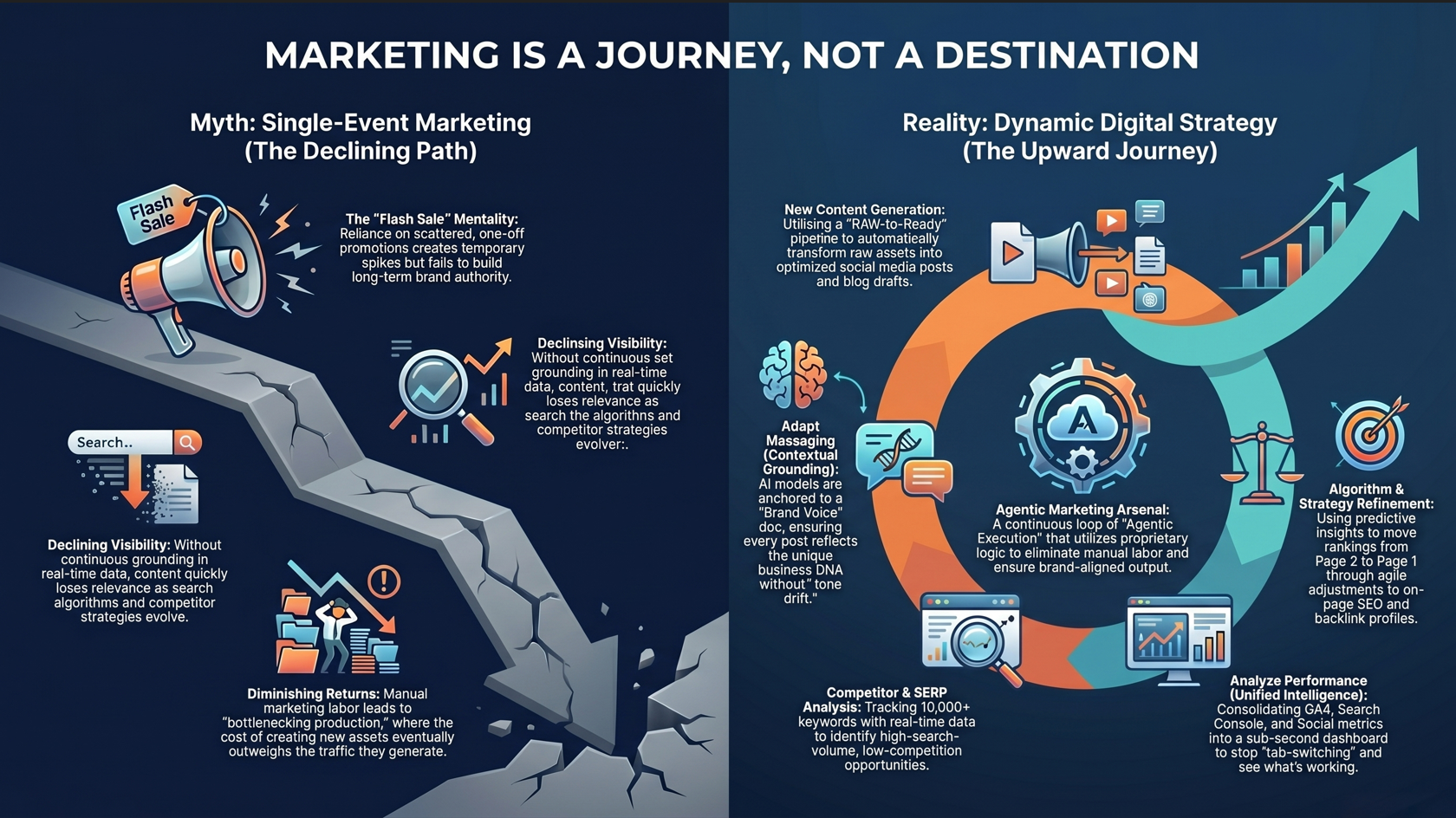
Marketing is often mistakenly viewed as a one-time task—launch a campaign, drive traffic, and call it a day. However, this approach is fundamentally flawed in today’s dynamic digital landscape. Marketing is a continuous process, not a single campaign or task. The digital world is constantly evolving, with new platforms, technologies, and consumer behaviors emerging regularly. What works today may be obsolete tomorrow, making it essential to adapt and refine strategies over time.
The digital landscape evolves rapidly, requiring constant adaptation. Search engines update their algorithms, social media platforms introduce new features, and consumer preferences shift with each passing season. A one-time marketing effort is unlikely to keep pace with these changes, leading to declining visibility and engagement. For example, a website optimized for desktop search in 2020 may struggle to rank for mobile searches in 2024 without ongoing adjustments.
SEO and marketing strategies must be maintained to stay relevant. Search engines prioritize fresh, high-quality content, and competitors are always refining their tactics. A single SEO campaign without regular updates to content, keywords, or technical elements will eventually lose traction. Similarly, short-term marketing tactics—like a flash sale or a single social media push—may generate quick wins but fail to build sustainable brand growth. Long-term success requires consistent effort to nurture relationships, refine messaging, and align with evolving market demands.
By treating marketing as an ongoing journey rather than a one-time project, businesses can ensure their strategies remain effective, adaptable, and aligned with their goals.
SEO: A Never-Ending Journey for Visibility
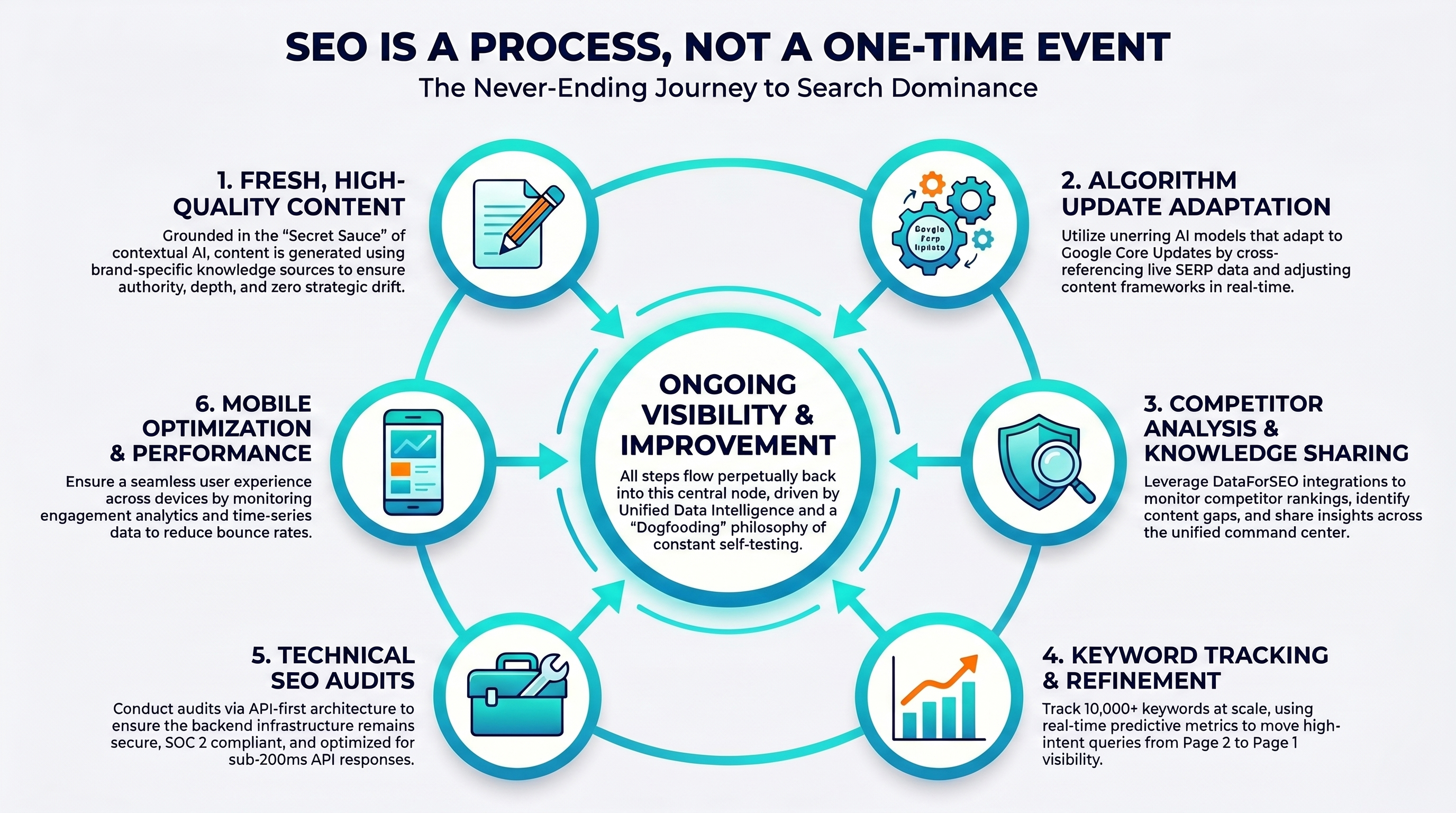
Search engine optimization (SEO) is one of the most critical components of digital marketing, yet it is often misunderstood as a one-time task. In reality, SEO is a never-ending journey that demands continuous effort to maintain and improve visibility. Search engine algorithms are constantly updated, and these changes can significantly impact rankings. For instance, Google’s Core Updates and Panda algorithm changes have reshaped how content is evaluated, emphasizing quality, relevance, and user intent. To stay ahead, businesses must regularly optimize their strategies to align with these evolving standards.
Fresh, high-quality content is critical for maintaining SEO rankings. Search engines prioritize websites that provide valuable, up-to-date information. A blog post published in 2022 may lose relevance if new data or trends emerge, making it essential to refresh content periodically. Additionally, creating new content that addresses current industry trends or user queries can help attract organic traffic and improve search visibility.
Competitor analysis and keyword tracking are also vital for sustained SEO success. Monitoring competitors’ strategies allows businesses to identify gaps and opportunities, while tracking keyword performance helps refine content targeting. Tools like Ahrefs, SEMrush, and Google Keyword Planner enable marketers to stay informed about search trends and adjust their keyword strategies accordingly.
Technical SEO requires regular audits to ensure optimal site performance. Factors like site speed, mobile optimization, and crawlability are critical for both user experience and search engine rankings. A website with slow loading times or poor mobile responsiveness may be penalized, even if its content is strong. Regular technical audits and fixes—such as optimizing images, improving site structure, and fixing broken links—help maintain a strong SEO foundation.
Marketing Beyond Initial Campaigns: Sustaining Engagement
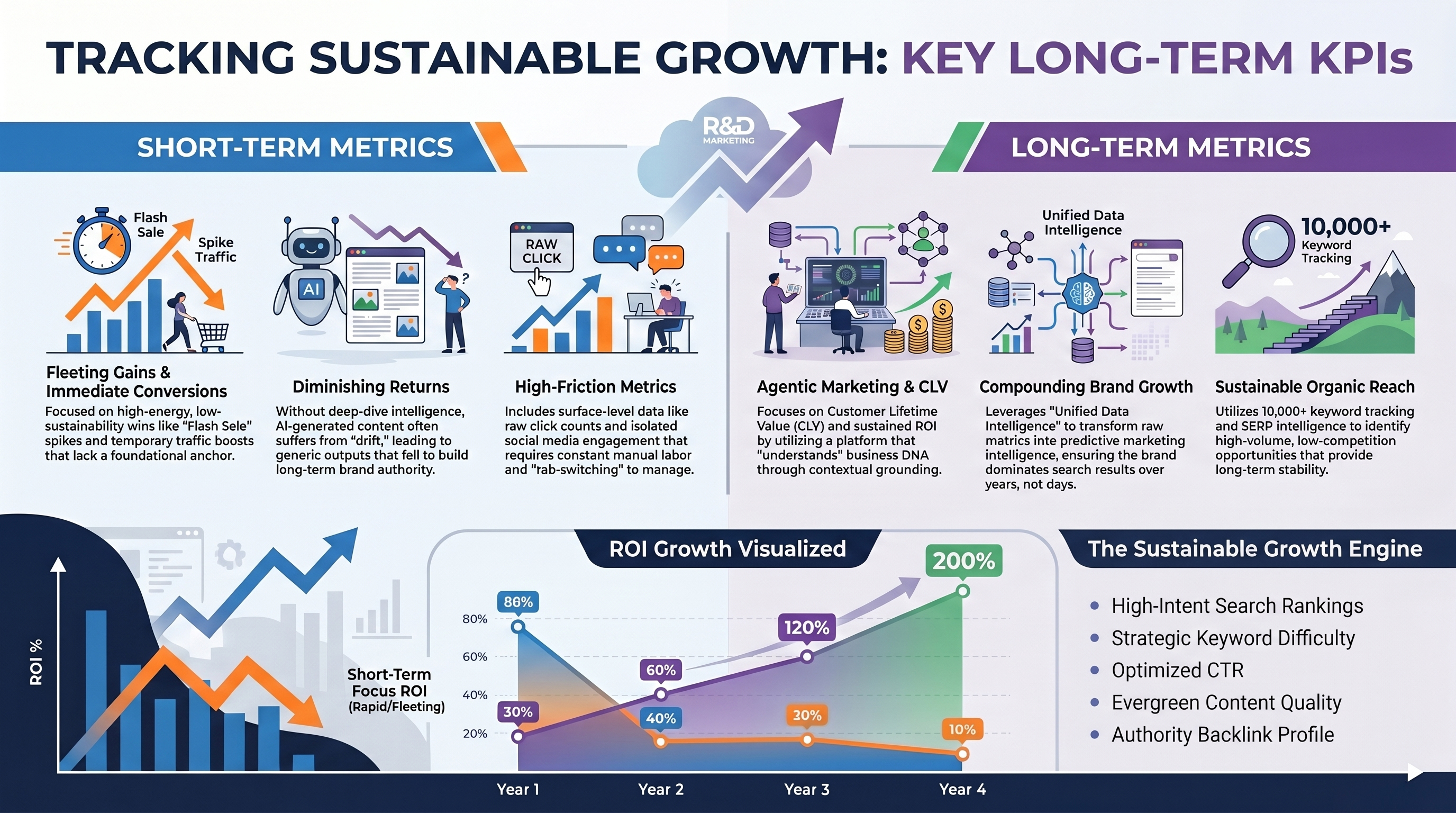
Once the initial marketing campaigns are launched, the real challenge begins: sustaining engagement with your audience. Customer retention and loyalty are not accidental—they require consistent effort, thoughtful strategy, and a deep understanding of consumer behavior. In a world where attention spans are short and competition is fierce, businesses must nurture relationships through ongoing marketing efforts.
Data-driven insights from ongoing campaigns are essential for refining future strategies. By analyzing metrics like click-through rates, conversion rates, and customer feedback, marketers can identify what works and what needs improvement. For example, A/B testing different email subject lines or ad creatives can reveal which approaches resonate most with your audience. These insights enable businesses to optimize their campaigns and allocate resources more effectively.
Social media, email marketing, and content marketing all require continuous nurturing. Social media platforms are constantly changing their algorithms and features, so businesses must adapt their posting schedules, content formats, and engagement tactics. Email marketing thrives on regular interaction, with segmented campaigns and personalized messages driving higher open rates and conversions. Content marketing, whether through blogs, videos, or podcasts, must remain relevant and aligned with audience interests to maintain traction.
Adapting to trends and consumer behavior is another key aspect of long-term marketing success. What worked six months ago may not work today, so businesses must stay agile. For instance, the rise of short-form video content on platforms like TikTok and Instagram Reels has shifted how brands engage with audiences. By staying attuned to these shifts and experimenting with new formats, businesses can ensure their marketing remains fresh and impactful.
Ultimately, marketing is not a one-time event—it’s a continuous process of building, maintaining, and growing relationships with your audience. By prioritizing sustained engagement, businesses can foster loyalty, drive long-term growth, and stay ahead of the competition.
Measuring Success: The Role of Long-Term Metrics
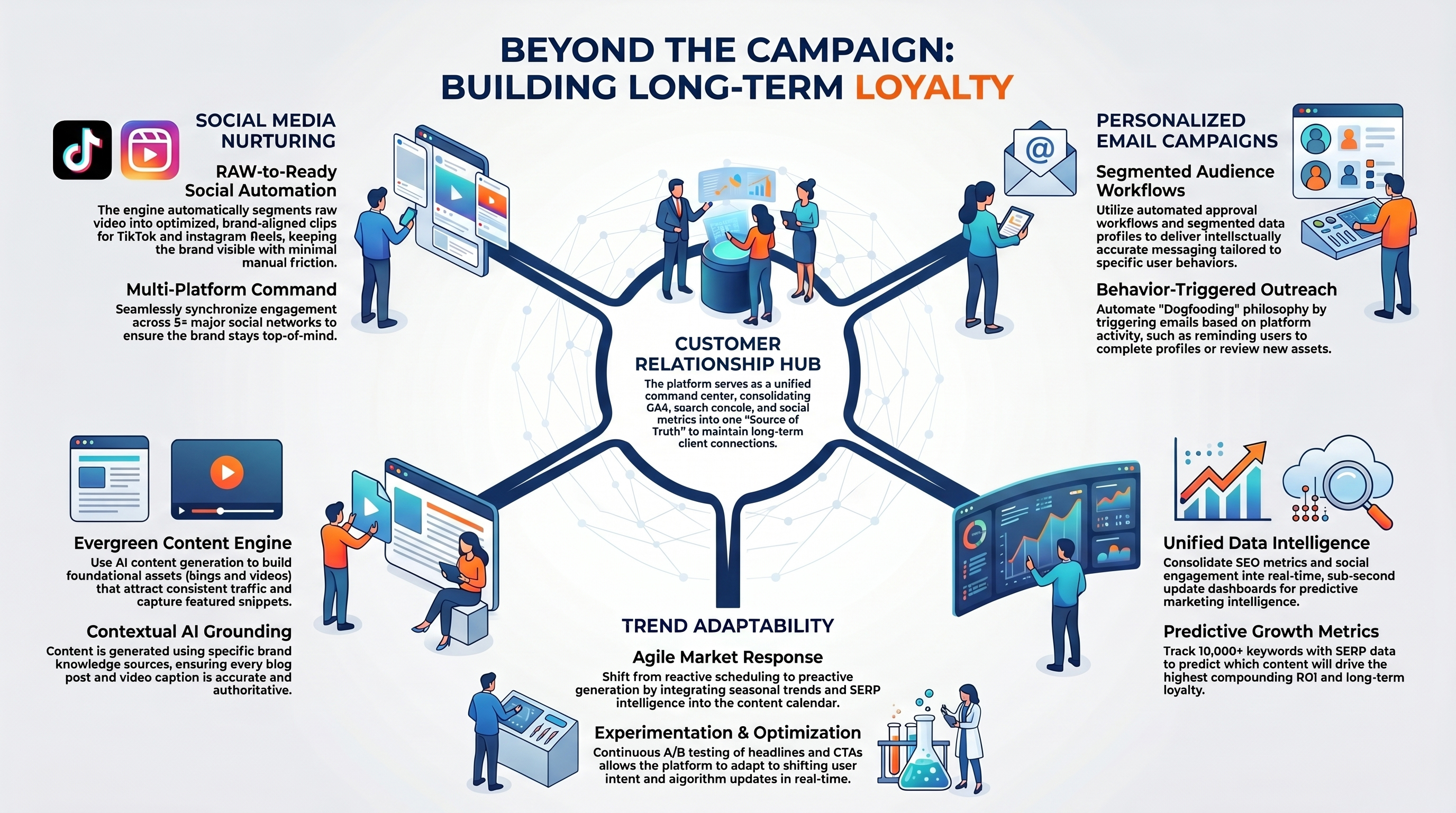
To understand the effectiveness of ongoing marketing efforts, businesses must track long-term metrics that reflect sustained performance. Unlike short-term campaigns, which may show immediate results, marketing success is measured over time through key performance indicators (KPIs) such as click-through rates (CTR), conversion rates, and customer lifetime value (CLV). These metrics provide valuable insights into how well marketing strategies are driving engagement, generating leads, and contributing to revenue.
A/B testing and iterative improvements are essential for optimizing marketing performance. By testing different versions of ads, landing pages, or email subject lines, businesses can identify what resonates best with their audience. For example, a marketing team might test two variations of a Facebook ad—one emphasizing urgency and the other highlighting social proof—to determine which drives higher clicks and conversions. These insights allow for continuous refinement, ensuring that marketing efforts remain effective and relevant.
Long-term ROI analysis highlights the value of sustained marketing efforts. While initial campaigns may yield quick returns, the true impact of marketing is often seen over months or even years. Tracking customer acquisition costs, retention rates, and brand awareness metrics helps businesses understand the long-term value of their investments. For instance, a well-executed SEO strategy may take months to show results, but its impact on organic traffic and sales can be significant over time.
Tools like Google Analytics, CRM systems, and marketing automation platforms provide ongoing performance insights. These tools enable businesses to monitor campaign performance, track user behavior, and make data-driven decisions. By leveraging these analytics, marketers can adjust their strategies in real time, ensuring that their efforts remain aligned with business goals and audience needs.
Measuring success through long-term metrics is not just about numbers—it’s about understanding how marketing efforts contribute to sustainable growth. By focusing on these insights, businesses can refine their strategies, maximize returns, and build a marketing foundation that delivers lasting results.
Conclusion: Building a Sustainable Marketing Strategy
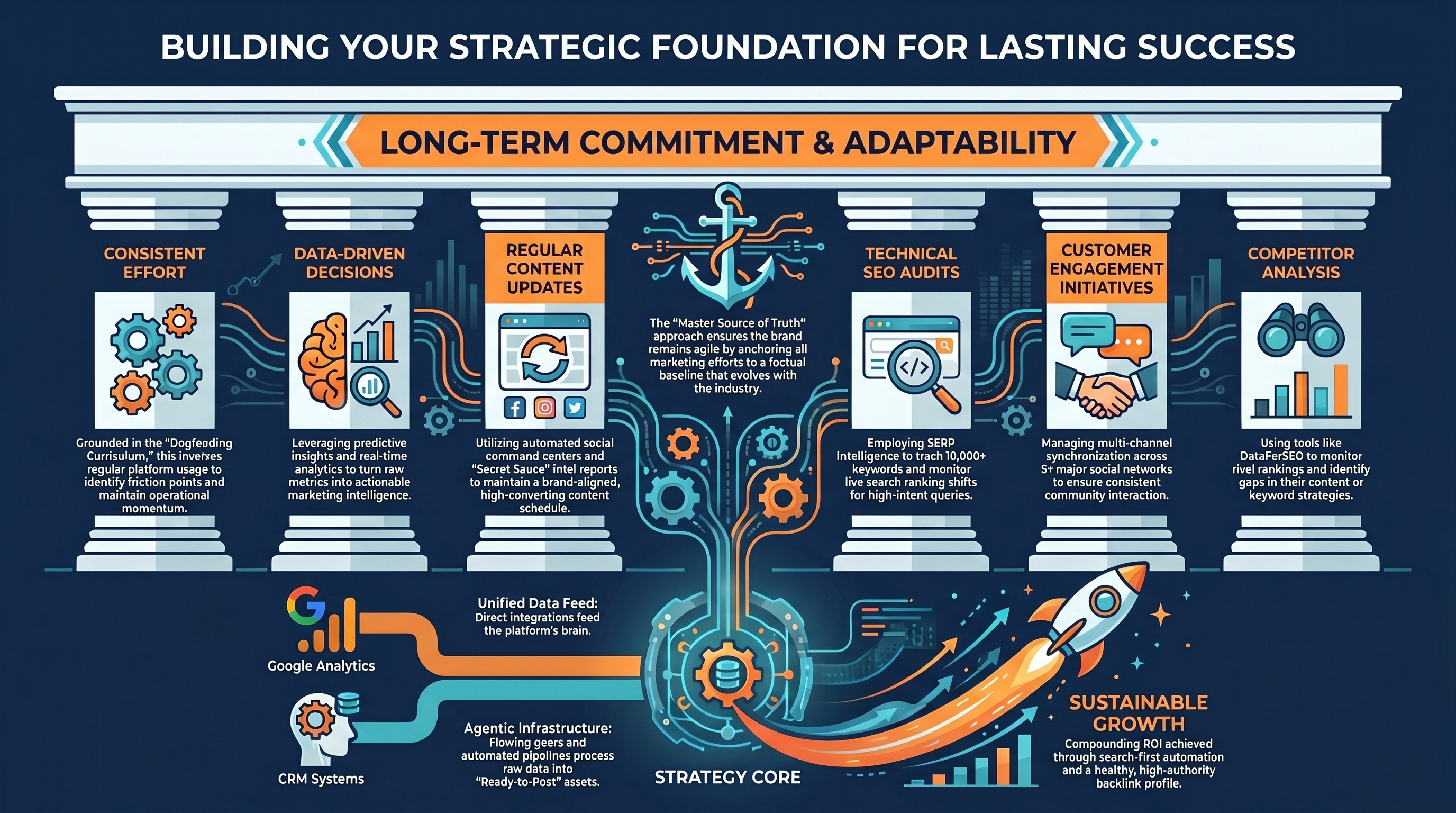
Marketing success hinges on consistency, adaptability, and data-driven decision-making. Treating marketing as a one-time task overlooks the ever-changing digital landscape and the need for ongoing optimization. By investing in SEO and marketing as ongoing processes, businesses can ensure their strategies remain relevant, effective, and aligned with evolving consumer demands.
To build a sustainable marketing strategy, prioritize regular content updates, technical SEO audits, and customer engagement initiatives. Stay ahead of competitors by continuously analyzing performance data and adjusting tactics. Embrace tools like Google Analytics and CRM systems to track long-term metrics and refine your approach.
Ultimately, the most successful brands are those that view marketing as a long-term commitment. By fostering ongoing engagement, adapting to trends, and leveraging data insights, businesses can create lasting value and drive sustainable growth. Invest in your marketing efforts today, and watch your brand thrive in the long run.